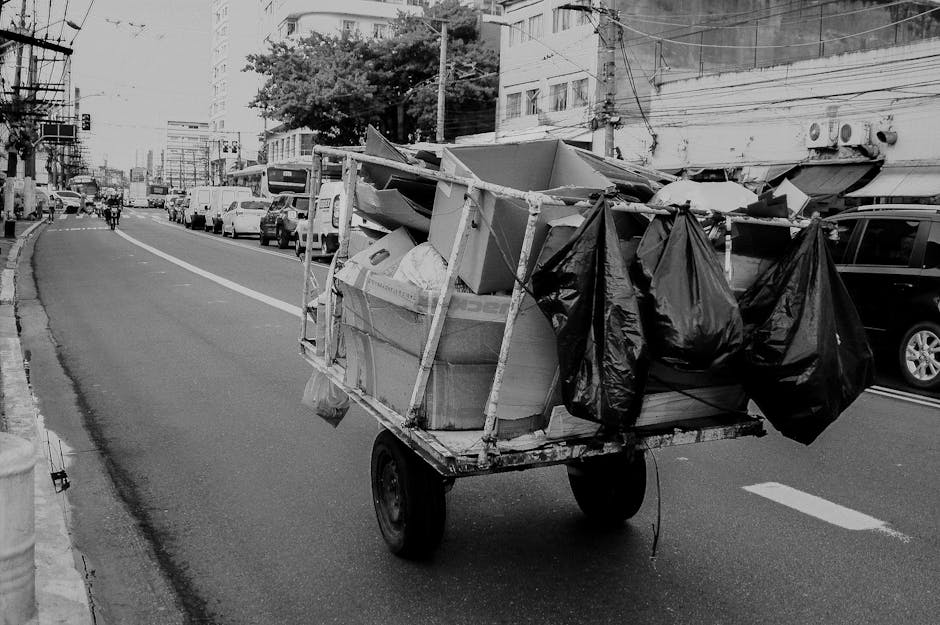
Business Waste Removal in Whitechapel

Business waste removal in Whitechapel should be straightforward, orderly and suitable for the way local workplaces operate. Our service is set up to handle commercial rubbish from offices, shops, hospitality venues, managed properties and other business premises, with collection arranged around the practical needs of the site. We remove mixed waste streams, separate reusable or recyclable materials where possible, and take away bulky items that cannot stay on the premises.
The service is centred on efficient collection, clear sorting and responsible disposal. That means the emphasis is not just on taking items away, but on handling the load in a way that suits the type of waste involved. Some jobs are straightforward clearances of unwanted furniture or packaging. Others involve regular office waste, surplus equipment, archive material or mixed contents left after a refit. In every case, the aim is to keep the process simple for the business while making the disposal route clear.
Use our service when you need an arranged collection rather than an ad hoc bin fill. Tell us what has to go, where it is located and how it is stored, and we can assess the right approach. If you are planning ahead, it helps to group similar items together and note any access issues such as stairs, loading restrictions or shared entrances. That keeps the collection practical and reduces avoidable delays.
Commercial waste collections for workplaces
We handle a broad range of non-hazardous business waste that builds up in day-to-day trading or after a change in premises use. Offices often need help with desks, chairs, filing cabinets, monitors and mixed paper waste. Retail and hospitality sites may need packaging, display units, redundant stock or damaged back-of-house items removed. Our work is to clear the load in a way that fits the site and leaves the area ready for continued use.
For many customers, the value of this service lies in keeping the worksite functioning. Collections can be planned around opening hours, access windows or periods when less staff traffic is present. If the items are already gathered in one area, the removal is usually more straightforward. If they are spread across floors or rooms, we can still work through them methodically. Pricing and quotes information is useful when you want to understand how the volume, item type and access conditions can shape the final figure.
Commercial loads often contain a mixture of materials, so the key decision is how to present the waste before collection. A simple list is often enough, but it is helpful to separate bulky furniture from lighter mixed rubbish and from anything needing special handling. Clarity at the outset makes it easier to plan the right vehicle space and the right labour for the job. If you are unsure how to describe the load, a short written summary is usually enough to start.
Office waste removal and clear-outs
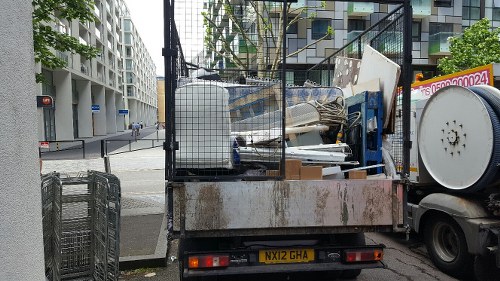
Office waste removal is often needed when businesses are reorganising desks, replacing furnishings or emptying storage areas. We remove office chairs, tables, cabinets, shelving, boxed paperwork, outdated IT equipment and general clutter that is no longer needed on site. The service is suitable for single-room clearances as well as larger office floors, subject to access and the nature of the items involved.
Where items are still reusable, it is sensible to keep them separate from ordinary rubbish. That makes it easier to decide whether they should be taken as disposal waste or handled as furniture or equipment clearance. Office clearance can be a good match when you need a more organised removal of desks, cupboards and mixed office contents rather than a single-item collection. We can also work alongside a phased move so that clearing one area does not interfere with the rest of the premises.
A careful office clear-out normally starts with the spaces that are most difficult to work around, such as storerooms, printer corners and archive zones. Once those areas are opened up, the remainder of the job is easier to assess. If you have several categories of item, it helps to identify what should be removed first and what can wait. That keeps the collection focused and gives the business more control over the order of work.
Furniture and fixture disposal
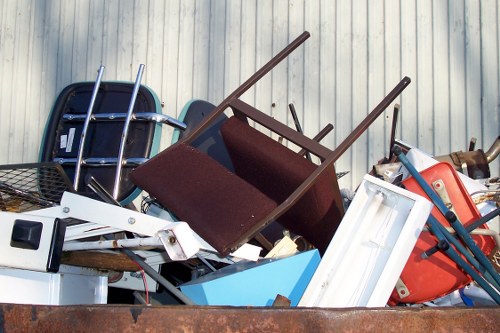
Many business clearances involve furniture that is no longer fit for use but still occupies valuable floor space. We collect desks, meeting tables, chairs, filing cabinets, storage units, reception seating and other office or workplace furniture. In some cases, the task also includes loose fixtures such as shelves or counters that are being replaced as part of a wider refurbishment. The service is designed to be practical rather than decorative: the emphasis is on getting the item out safely and legally.
Furniture disposal suits businesses that have a defined list of unwanted items and want those items removed with minimum disruption. If several pieces of furniture are going together, it can be helpful to note whether they are assembled, fixed in place or broken down already. That information affects how the load is handled and whether extra time is needed on site. For customers with a mixed load, combining furniture disposal with general waste removal can be the most efficient route.
Good disposal planning is often about deciding what should be dismantled before collection and what should remain intact. Some items are quicker to move whole, while others are easier to carry once they are broken down into manageable parts. If the furniture is heavy, awkward or located on an upper floor, a simple description of the route matters as much as the item list. That helps keep the collection organised and the premises usable during the work.
Recycling-aware waste handling
Not all business waste should be treated the same way. Paper, card, metals, certain plastics and some electrical items may all follow different disposal routes, and separating them properly helps improve the outcome of the collection. Our approach is to sort the material so that recyclable items are not mixed unnecessarily with general waste. That keeps the removal process more orderly and supports a better final handling route for the load.
Recycling and sustainability explains more about the way recyclable streams can be managed alongside general rubbish. For a business customer, the practical point is simple: the cleaner the separation, the easier it is to direct the waste correctly. Where you can, keep paper, cardboard and reusable office materials away from food waste or damaged mixed rubbish. It is also useful to identify any items that contain batteries, cables or electronic parts, as these may need a different treatment from standard office rubbish.
If the waste includes several material types, a short internal checklist can make the handover easier:
- separate furniture from loose rubbish
- keep cardboard and paper together where possible
- identify any electrical equipment
- note heavy or awkward items first
- flag anything that should not be mixed with ordinary waste
Bulky items and specialist commercial loads
Some commercial clearances involve larger individual items rather than bags or boxes of waste. This can include reception furniture, oversized shelving, fridges from staff areas, old stock fixtures or other items that are awkward to move through shared spaces. When bulky items are involved, the main concern is not just weight but shape, access and how safely they can be removed from the building. We work through those jobs in a controlled way so the premises remain manageable during the collection.
Fridge and appliance removal is relevant where businesses need old appliances taken away from kitchens, staff rooms or storage areas. These items often need more careful handling than ordinary furniture, particularly if they are heavy or awkwardly placed. If your site also has other bulky items, it can make sense to group them into one clearance plan rather than dealing with each item separately. That gives a clearer picture of the work and can reduce repeated handling on the day.
Commercial waste removal is usually simplest when the largest items are identified early. If you can point out what is fixed, what is freestanding and what has to travel through narrow access points, the collection can be planned more accurately. That does not mean the job has to be complex; it simply means the removal route is thought through before the work starts. For many premises, that is the difference between a disruptive clear-out and a tidy, contained one.
About Whitechapel
Whitechapel is an inner district in the East End of London, in the London Borough of Tower Hamlets. It lies to the east of the City of London and has long been shaped by its position on a major route into and out of the capital. The area developed from a medieval settlement around Whitechapel High Street and grew rapidly during London’s expansion, especially in the eighteenth and nineteenth centuries, when streets, courts and terraces filled with housing, workshops and trade. Its history is closely linked to migration, industry and market life, and that layered past remains visible in the street pattern and the variety of surviving buildings. Whitechapel Road forms a central corridor through the district and connects a series of older landmarks, civic spaces and modern developments. The Royal London Hospital has had a major presence in the area for generations, and the London Hospital Medical College contributed to Whitechapel’s reputation for medical care and teaching. Alongside those institutions, the district has also been known for its markets, religious buildings and places of worship, including several notable churches, mosques and community centres that reflect changing populations over time. The area is served by Whitechapel station, which today links the district into the Underground and Elizabeth line network, making it one of the better-connected parts of east London. Nearby, the streets around Brick Lane, Aldgate and Stepney show how closely Whitechapel sits within a wider urban fabric of commerce, housing and movement. The district has also featured in literature and social history because of its dense population, strong sense of place and the many transformations that have taken place over the centuries. Even now, Whitechapel retains a character built from layering rather than uniformity, with older streets, institutional buildings, market frontage and newer construction standing side by side.
Waste types we can remove from commercial premises

Business sites produce different kinds of waste, and the right collection depends on what has accumulated and how it is stored. We can remove mixed rubbish from offices and shared premises, redundant furniture from workspaces, packaging from retail stockrooms and general clutter from storage rooms. A practical removal service keeps the site clear without turning the collection into a long disruption, which is important for businesses that still need to operate while the waste is being taken away.
Business waste removal is the main service for workplaces that want a regular or one-off collection of commercial rubbish. If your business has a specific kind of load, other dedicated pages may be more appropriate: builders waste clearance for renovation debris, confidential shredding for sensitive paper material, and hazardous waste disposal where the contents need specialist handling. Choosing the right route matters because not every item belongs in the same collection.
Matching the waste type to the right service helps keep the job orderly and reduces the risk of mixing materials that should stay separate. It also makes it easier to give an accurate description when requesting a quotation. If the load includes a little of everything, explain that up front rather than trying to simplify it too much. A clear description helps us judge whether the work is best handled as a standard commercial clearance, a furniture removal, or a more specific disposal task.
How to prepare a business waste collection
A well-prepared collection usually starts with a simple inventory of what is staying and what is going. You do not need a perfect list, but it helps to note the item groups, the quantity involved and where they are located. If items are in different rooms, on different floors or behind restricted access, that should be mentioned early. The same applies if there are time constraints around opening hours or shared building rules. Contact us when you are ready to discuss the removal and arrange the next step.
Photos can be useful when the waste is bulky or difficult to describe, but they are not the only way to start. A concise message with the item type, approximate volume and site access details is often enough for an initial quotation request. If the work is spread over several areas, it helps to say which area is the priority. Book online if you prefer a direct way to send the job details rather than phoning or writing a longer message.
When planning the collection, it is also useful to decide whether the premises need a single visit or a phased approach. Some businesses only need one clear-out; others want one room cleared at a time so daily operations can continue. A brief note about timing, loading points and any items that must be handled first will help shape the collection. The more specific the information, the easier it is to match the service to the site.
Quotation factors and service options
Quotation details for business waste removal normally depend on a few straightforward factors: the amount of waste, the type of items, how easy they are to access and whether any materials need to be handled separately. Heavy furniture, several floors of items, or a mixed load that includes both waste and reusable goods can all affect the work required. That is why a sensible description of the job is more valuable than a vague estimate. It gives a clearer basis for the price discussion and reduces the chance of misunderstanding.
We also consider whether the collection is a one-off clear-out or part of a repeating arrangement. Some customers need occasional collections after office changes or storage clean-ups; others want a more regular arrangement for general commercial waste. The right plan depends on the way your premises operate, the quantity generated and the kind of items being discarded. If you want to compare options before making a decision, the most useful step is to ask for a quotation based on the actual waste rather than a broad assumption.
For a straightforward next step, send the item list, location details and any access notes, then ask for a quotation that matches the job. If you want to keep the process simple, begin with a short message and let the waste type guide the rest. Request a quotation when you are ready and we can help with the practical removal plan.